DiscoverEthiopia
A land of ancient civilizations, stunning landscapes, and rich cultural heritage
Land of Origins
Ethiopia, officially known as the Federal Democratic Republic of Ethiopia, is a landlocked country in the Horn of Africa. It is the second-most populous nation in Africa with over 120 million people, and the tenth-largest by area, covering 1,100,000 square kilometers. Ethiopia is a land of dramatic contrasts, from the highest peaks of the Simien Mountains to the lowest point in the Danakil Depression, one of the hottest places on Earth.

Ancient Civilization
Ethiopia is home to one of the world's oldest civilizations, with a documented history spanning over 3,000 years. The Kingdom of Aksum was one of the four great powers of the ancient world, alongside Rome, Persia, and China. Ethiopia was one of the first Christian nations, adopting Christianity in the 4th century AD. The country is dotted with ancient sites including the rock-hewn churches of Lalibela, the obelisks of Axum, and the medieval castles of Gondar.

Ethiopian Orthodox Christianity
The Ethiopian Orthodox Tewahedo Church is one of the oldest Christian denominations in the world, with roots dating back to the 4th century AD when Christianity was declared the state religion under King Ezana of Axum. The word 'Tewahedo' means 'being made one' in Ge'ez, the ancient Ethiopian language. The church maintains unique traditions including the use of the Ge'ez language in liturgy, distinctive religious art and iconography, sacred music performed with traditional instruments like the kebero drum and sistrum, and elaborate ceremonial practices.

Stunning Landscapes
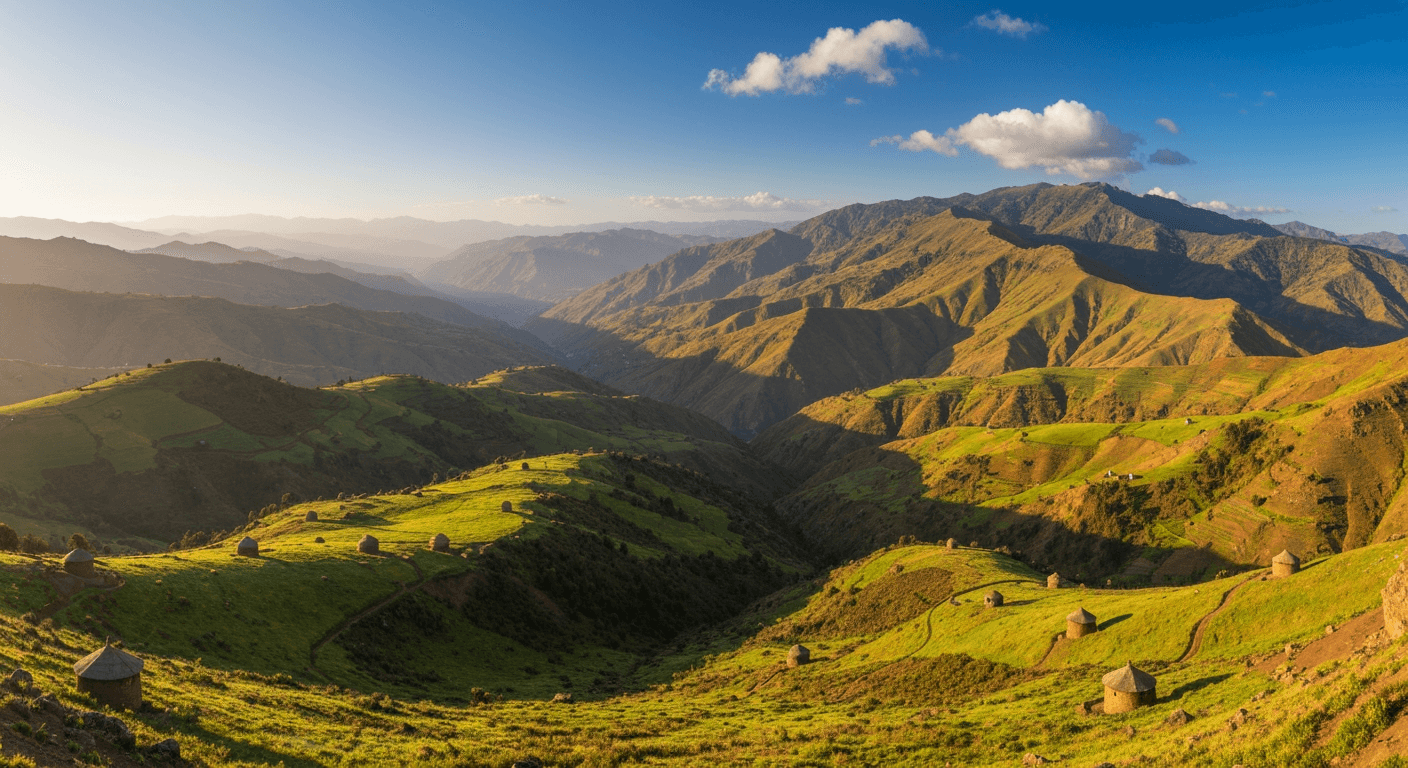
Ethiopia's diverse geography includes the Ethiopian Highlands, the Rift Valley, and vast lowland regions. The Simien Mountains, a UNESCO World Heritage site, feature dramatic cliffs and unique wildlife including the Gelada baboon. The Great Rift Valley runs through the country, creating a chain of beautiful lakes. The Blue Nile originates from Lake Tana, providing 85% of the Nile's water. From lush highlands to arid deserts, Ethiopia's landscapes are breathtaking.
Rich Cultural Heritage
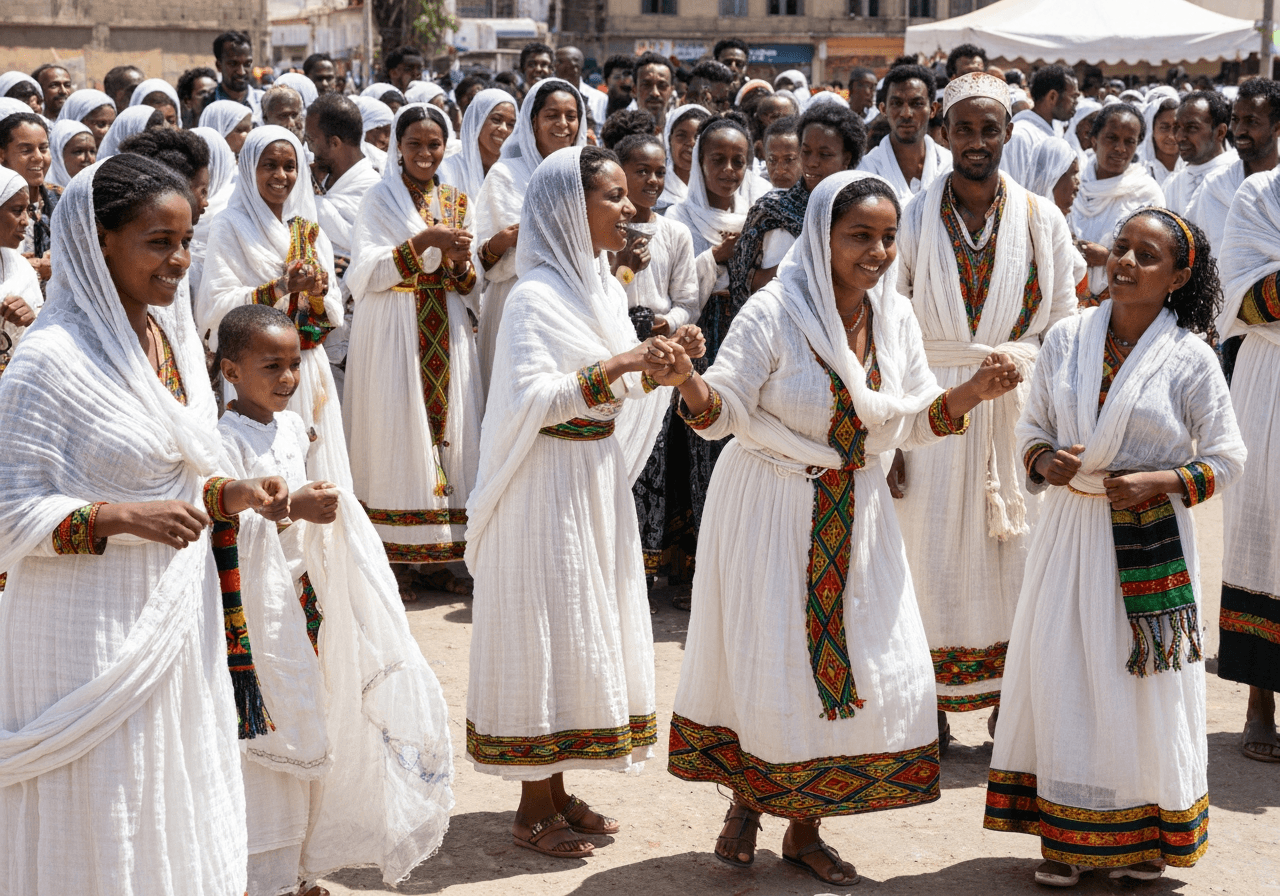
Ethiopia is a mosaic of over 80 ethnic groups, each with its own language, culture, and traditions. The country has never been colonized, preserving its unique cultural identity. Ethiopian music, featuring the distinctive pentatonic scale, and traditional dances are captivating. The cuisine, centered around injera (a sourdough flatbread) and spicy stews called 'wat', is unique and flavorful. Traditional clothing varies by region, with the white cotton 'netela' being widely recognized.
Need to Know
Essential information for your Ethiopian adventure
Currency
The local currency is the Ethiopian Birr (ETB). ATMs are available in major cities, and credit cards are accepted in larger hotels and restaurants.
Visa Requirements
Tourists visiting Ethiopia need a Visa. The easiest option for many is the e-Visa, available online for most nationalities.
Language
Amharic is Ethiopia's official language, but English is widely spoken in tourist areas, hotels, and by guides.
Dress Code
Women are encouraged to pack a scarf to cover their hair in churches and mosques to maintain a respectful environment amongst worshippers.
Cultural & Religious Diversity
Ethiopia is home to diverse cultures and religions: Ethiopian Orthodox Christianity, Islam, and some Indigenous traditions too!